This extended essay is also available on the Amazon Kindle store for $0.99.
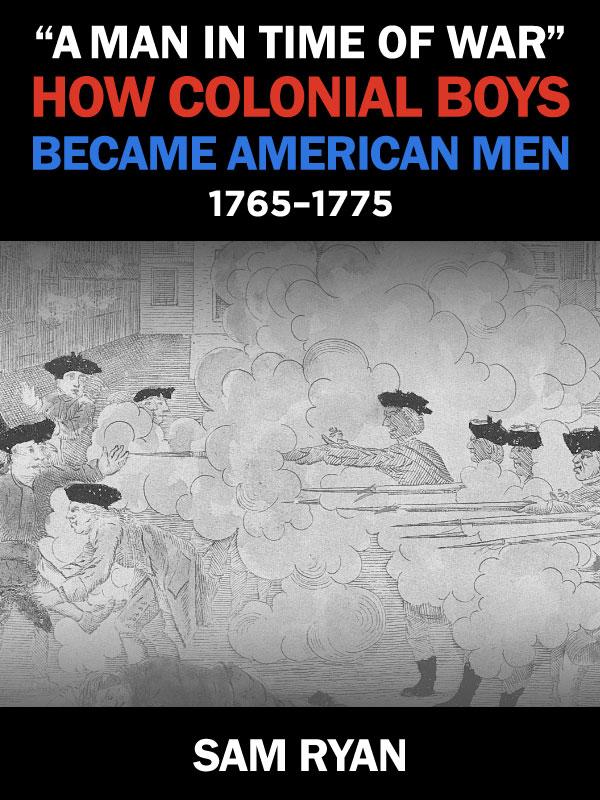
Blackguardism came constantly under boys’ eyes, and had the charm of force and freedom and superiority to culture or decency. One might fear it, but no one honestly despised it. Now and then it asserted itself as education more roughly than school ever did. One of the commonest boy-games of winter, inherited directly from the eighteenth-century, was a game of war on Boston Common…
Ten or twelve years afterwards when these same boys were fighting and falling on all the battle-fields of Virginia and Maryland, [I] wondered whether their education on the Boston Common had taught [them] how to die.
—Henry Adams, The Education of Henry Adams (1918)
Mrs. Bessie shook her head, but she wasn’t going to argue any more.
“How old are you, Johnny?” she asked.
“Sixteen.”
“And what’s that—a boy or a man?”
He laughed. “A boy in time of peace and a man in time of war.”—Esther Forbes, Johnny Tremain (1943)
Contents
- Introduction
- The Youth Economy in New York and Boston
- Traditional Violence
- An Unhappy Family
- Ritual Protests: The Stamp Act and Non-Importation
- Boston and New York Occupied
- Tea Parties
- Spreading the News
- Young Soldiers and the Outbreak of War
- Conclusion: Learning How to Die
- Bibliography
Introduction
In 1775, at the onset of the American Revolution, the majority of colonial Americans were children under the age of sixteen.1 You can read dozens of books about the period—about the politics of taxation, about gender or slavery, about the military events of the war—and not come across this fact. The story of the Revolution has been told thousands of times in the centuries since it ended, filtered through interpretive frameworks that illuminate specific subplots—often in interesting ways that nevertheless leave out important information. Since the middle of the twentieth century, historians have framed the Revolution most often as a narrative of “the people,” of the ordinary men and women who made a difference without making into the ranks of the “Founding Fathers.”2 This development in historiography is welcome, and to discuss the emergence of a democratic republic in terms of the people who made it happen on the ground, with actions as well as words, is an indispensable addition to the long-standing narratives about intellectual and political leaders. Yet the commonplace story of the American Revolution leaves out a key subplot: it is in many ways the story of a generation. It is also a story about a collective coming of age. This story exists underneath the broader narrative of the American Revolution and its participants, in the footnotes of the historical literature, in the opening chapters of memoirs, in newspaper stories and broadside pamphlets.
This paper will attempt to tell a part of that generational story, examining the political roles and experiences of a generation of boys and young men in New York City and Boston, particularly in informal activities like protests and street fighting.
It is always difficult to talk meaningfully about generations. Their borders are never clearly defined and their utility as units of measurement is always, rightly, in doubt. But there is something new about the boys who came of age between 1765 and 1775. They were in a formal sense the last English boys, and the first American men, of the new nation. They grew up in a context of political change, social upheaval, and impending war. Their experiences as young men shaped the course of the Revolution and endured, as personal and popular memories, well into the new republic and the antebellum period of the nineteenth century.
The task of explaining what boys and young men did in the Revolutionary crisis is complicated by two historical factors. First, boys are not permanent, and the period under consideration spans a decade. Those who were sixteen years old in 1765, at the onset of the Stamp Act crisis, would be twenty-six at the outbreak of military conflict in 1775. Similarly, those who were fifteen in 1775 were only five at the beginning of urban unrest, and would be unlikely to see the early imperial crisis as the source of their political motivations. The people of interest, then, are a large group. At one end of the spectrum, they are the teenagers who came of age as the Stamp Act crisis was unfolding in the 1760s. At the other end, they are the boys and young teens who enlisted as child soldiers or experienced British occupation in the first years of the war. In between are a generation of young men who came to define the social and political impact of the revolution in America. The question of what influence childhood experiences had on this generation—of how they decided what was worth risking their lives for—has been underexplored.
The second historical complication, related to the first, is the meaning of age in late colonial America. We think we know what a child is today, but what was it in New York City in 1770? Although categories like “boy,” “teen,” and “man” are always in motion, defined at an unsteady intersection of law, custom, and culture, there are trends and generalizations worth sticking to. For this study I have cast a wide net and decided to mark the onset of “adulthood” at twenty-one, the age of legal majority in all of the colonies and in English common law.3 Past the age of twenty-one, men gained certain political rights that separated them definitively from youth. They could vote and be elected to office as “freeholders,” but could also drink in taverns, where so much of local politics was informally conducted.4
Although most historians now agree that in colonial America there was a stage of “youth” separate both from early childhood and from full maturity, it is not well-defined.5 The historian Howard Chudacoff maintains that until about 1850, “age was more a biological phenomenon than a social attribute.”6 This overstates the case—as we will see, both youths and adults clearly saw age as a salient consideration in describing social and political events. But the borders of youth and manhood—not to mention the language used to refer to transition stages—were imprecise and located more in practice than in law. Most eighteen- or nineteen-year-olds would have been considered men, and servants of all ages were called “boy.” There was by no means a consensus on when a boy became a man in colonial American discourse, and so I admit that the choice of twenty-one, though based in contemporary law, is fairly arbitrary. More than anything, it marks the absolute upper boundary of youth.
There was no high school, no “dating,” no secular youth culture that transcended local and traditional customs. But growing up in colonial America was a legal and social process as well as a physical fact, marked by discrete transitional steps on the path to adulthood. In Massachusetts, for example, the age of legal “discretion” in cases of slander was fourteen, indicating a commonly accepted stage of responsibility. Eligibility for militia service began at sixteen, indicating another step.7 Eligibility for employment was generally more dependent on physical maturation and competence than on age. Young people in Boston and New York almost always worked after school or instead of school, according to their abilities rather than their age. As Jesse Lemisch put it, “the eighteenth century thought about child labor only long enough to conclude it a good thing.”8 Still, the legal and occupational categories that contained urban boys and young men served to separate them quite effectively from their parents and adult neighbors. In both cities, a “youth economy” functioned alongside the world of adult activity.
The Youth Economy in New York and Boston
I have chosen to discuss Boston and New York because of these shared characteristics:
- They were subjected to local occupation and policing by the British army in the 1760s.
- They were centers of early resistance to the Stamp Act and other controversial imperial policies; each city was home to a powerful Sons of Liberty movement.
- They were “urban crucibles” for political unrest with influence on other cities and the rural towns surrounding them.9 They were also seaports with strong commercial and informational ties to the rest of the Atlantic world.
- They were, like the other colonial cities, demographically young. In 1771, white children under the age of sixteen made up thirty-four percent of the population of New York City. Forty-one percent of the city’s white males were sixteen or younger.10 Probably more than half of them were under twenty-one years old. A 1765 census of Boston revealed that fifty-eight percent of the town’s white male population was under sixteen, and that those boys made up a quarter of the entire population.11
- Their political economies and print cultures depended on child and teen labor, and their young populations were involved in the everyday operation of both cities as well as the street politics of the imperial crisis.
To be sure, the two colonies were different, and their differences will be kept in mind. (Perhaps the greatest difference is that the war started in Massachusetts, not in New York.) But they are similar enough to justify comparative analysis. First, any discussion of what youths did in these places in a time of crisis must be informed by what they did the rest of the time.
In the 1760s and early 1770s, it was far from preordained that a bloody war between England and the colonies was approaching. With no alternative, nearly all colonists remained loyal to the crown. They spent these years negotiating to avoid conflict rather than preparing for it. Like everyone else, boys growing up in New York and Boston went about their business as tensions built. The presence of imperial troops in these cities led to taunting, fistfights, and worse, but everyday life went on despite them. The lives of youths were interrupted, but not put on hold. What were they doing before the actual outbreak of war, and in between political crises?
The two cities were culturally quite different, stretching back to their origins, and those differences were manifested in education and in the youth economy. New Amsterdam had been established as a Dutch commercial colony, settled by fur traders in the early 1600s before British forces captured it and named it for the Duke of York (the future King James II) at the conclusion of the Second Anglo-Dutch War in 1667. It still had a significant Dutch population in 1765 and was religiously diverse, serving as a major immigration center for rural populations. Boston was founded by Puritans, religious dissenters from the Church of England, in 1630 as a spiritual community first and a commercial enterprise second. From its beginning, Boston had a serious religious commitment to the future, and a sense of the risks of failure. Early Bostonians were interested in commerce and science, among other things, but the preservation of a godly (and by extension literate) society was their highest priority. This commitment to Calvinist values would “linger well after the theology ebbed,” preserving a strong cultural preference for education.12
In colonial Boston, five free public schools enrolled between six and eight hundred children every year. Boys would enter one of the town’s Grammar or Latin Schools at age seven and leave at fourteen, literate in English but also “able to converse in Latin and… well grounded in Greek syntax and literature.” The town government provided these schools with generous funding; in 1751, the schools cost a third of Boston’s whole income.13 In the years leading up to the Revolution, British officials often painted the public schools as a training ground for radicals and insurgents, and indeed, Boston’s schoolboys seem to have worked in age cohorts to challenge and undermine British authority in the town. By 1774, the Boston militia could hide two cannons in the South Writing School for two weeks without a treacherous word from any of the two hundred students.14
In New York, some young boys also went to school, although far fewer than in Boston. The first free public grammar school was established in 1732, but died out in 1738; the next successful one was not founded until 1805. The Dutch had established elementary schools in New Amsterdam, and various religious denominations sponsored their own private schools, as did immigrant groups and professional tutors. However, the English government that took over in the 1660s was never much interested in public education. English colonists tended to view the schools as last resorts—places for children whose families belonged to religious minorities, or were too poor to afford the private tutors that middling families hired.15
The lack of public education in New York was a source of complaints among the province’s educated elite. In 1753, lawyer and politician William Livingston wrote a proposal for public secular schools, on the grounds that “the true Use of Education, is to qualify Men for the different Employments of Life … [and to make them] better Members of Society.”16 His plan was rejected. Chief Justice William Smith, in 1757, wrote scathingly that “our schools, both in town and country, are in the lowest order… the evidence of a bad taste, both as to thought and language, are visible in all our proceedings, public and private.”17 Livingston and Smith saw the lack of public schools as an economic or an intellectual problem, respectively, rather than a spiritual one, but their opinion seems to have been restricted to the upper levels of society. By and large, New Yorkers were educated at home or on the job, as apprentices or paid laborers. They learned skills—reading, writing, basic arithmetic—only as they were required for work, rather than completing a standardized program of formal education.18 The late development of public schools in New York suggests a popular acceptance of this status quo.
After completing school, a select few youths went on to college. In New York, they went to King’s College, later called Columbia, or the nearby College of New Jersey, later called Princeton. In Boston, they went to Harvard. It was common for those few boys who went to Harvard or King’s after graduating from primary school to do so at fourteen; the average King’s College student before 1775 entered at fourteen, and graduated at eighteen.19 John Hancock, like many others, entered Harvard at thirteen. A majority of colonial college students used their training to become lawyers or clergymen, the two occupations most concerned with literacy and with mastery of books. College graduates were disproportionately represented in the leadership caste of the Revolutionary era, at state and national levels: of the fifty-six signers of the Declaration of Independence, more than a third were college graduates, whereas only one in every thousand colonists had attended or graduated from college by 1776.20
With the exception of these few collegians, most youths who made it past school age took up a trade. In most cases, young urban workers participated in some kind of bound labor—working as apprentices for a set number of years in exchange for room, board, and training. This trajectory was very common in both New York and Boston, although boys in Boston tended to have a few more years of schooling before entering the workforce. The jobs available in the two cities were comparable. Manual tradesmen (shoemakers, carpenters, silversmiths) recruited and trained young assistants to handle everyday business. Captains in the merchant marine and the fisheries hired young sailors to man their vessels, often at surprisingly young ages.21 At sixteen, all physically capable boys were counted as militiamen (hence the attention to that age in early census records), but they rarely had to perform any duties related to militia service.22
On the eve of a political, social, and military revolution, youths in Boston and New York were learning and working their way toward adulthood in local, traditional formats. But—like the adults around them—they were also participating in new patterns of political expression, in events that were unfamiliar and full of potential.
Children and teenagers, especially those from hard-working families, did not usually make any deliberate record of their thoughts. There was little institutional or cultural encouragement to do so, and little incentive to preserve any documents they did create. Most of the sources that tell us about the political experiences of young people in this period, therefore, fall into one of three categories: contemporary accounts by relatively wealthy children with free time and education; memoirs and reminisces of youth from older people; and contemporary records of what children and teenagers actually did. This latter category is probably most important in explaining the politics of youth, because even illiterate minors were eager to “vote” with their fists and feet. In doing so, they made an impact in late colonial society without breaching the ivory tower of the Founding Fathers.
The topic of urban violence in American history is fraught with political and ideological implications for any historian who takes it up. A resurgence in professional interest in popular history in the 1950s is commonly attributed to the student radicalism and civil rights movements of the period. The attitude of historians in the early twentieth century toward Samuel Adams and his contemporaries as propagandists, as manipulators of media, was admittedly linked to a widespread perception of nationalist propaganda as the dark side of an emerging mass media. In the twenty-first century, as we experience the impact of worldwide connectivity and electronic social media on politics, it is becoming ever more popular to examine the organization and motivation of crowds and mobs in terms of social networks, information science, and communications technology.23 The content of historical work cannot be fully isolated from its context, and so it is no surprise that the historiography of mob or crowd action has shifted to favor it as ideas of political propriety have changed in the two centuries since the American Revolution.24 One recently published book, for example, laments the “taming of the American crowd,” and looks back fondly on the colonial period as a time when citizens were “far more ready than we to act collectively.”25
In 1765, when political culture in Boston and New York began to incorporate the threat of popular violence as a legitimate form of partisan expression, not everyone was eager for the change. “Class consciousness” in the Marxist sense would not emerge in either place until the mid-nineteenth century, but society was divided into visible and distinct (if fluid) categories: slaves, the poor, laborers, the “middling sort,” and the wealthy.26 It was widely understood that political and social deference was due to a community’s prosperous members, clergy, and appointed officials. Moreover, no one under the age of twenty-one was expected to have a formal political voice in any way, let alone a vote. When unpopular policies from London threatened the economic interests and political goals of Bostonians in 1765, the town’s middling artisans and merchants and its laboring “mechanicks,” including the sons and apprentices of each group, formed a radical coalition that upset this status quo and essentially created a new town government. In New York, the Sons of Liberty constituted a new political faction of their own, countering the existing De Lanceyites and Livingstonites.27 Harnessing the sheer demographic power of city youths was an essential tactic for radical agitators in Boston and New York. Ten years before the “shot heard round the world” at Lexington, boys and young men in the colonial cities were drawn into a traumatic political struggle with long-lasting consequences.
Traditional Violence
Acts of popular violence in the colonies were not by any means original to the 1760s. For decades, the colonial maritime community had resisted customs officials and British naval officers who tried to enforce commercial restrictions or “impress” (kidnap) sailors. The most prominent example was an anti-impressment riot that shut down Boston for three days in 1747.28 When townspeople met a danger to their common good, they took “extra-legal” measures to remove the problem.29 Most of these extralegal correctives—tarring and feathering, effigies, “riding the rail,” the demolition of unpopular buildings—were patterned on the traditional rituals of English working-class culture.30 Most of them also permitted youth participation.
The townspeople in Massachusetts who valued formal public schooling also sponsored more violent and less holy forms of education. According to historian Barry Levy, they “supported schools that not only enhanced the value of labor… but also traumatized children, forcing the formation of male work groups based partly on dissociation and controlled violence.” The public schools were often “scenes of violence and trauma” that put children through “severe socialization” and prepared them for difficult lives of manual labor.31 Samuel Adams, in 1780, famously described his native New England as a “Christian Sparta,” a place that traditionally inculcated virtue and martial prowess.32 Children were not thrown to the wolves in Boston, but the famed toughness of Spartan childhood had its analogues there. Twice a week, usually on Thursday and Saturday afternoons, schoolboys from the North and South ends of Boston met on the Common for play combat, often watched and encouraged by adult bystanders. Memoirs reveal that participating in these fights was a prerequisite to social acceptance by the town’s schoolboys.33 Corporal punishment, hunting, youth gangs, impressment riots, and other forms of training made New Englanders and New Yorkers formidable even as teenagers. “In the Cities,” one New York man warned a British correspondent, “you can scarcely find a Lad of 12 years old that does not go a Gunning.”34
The traditional corrective function of extralegal communal violence was present in all the colonies, and in the “mother country” from which most colonists had come. But one tradition especially—an annual holiday called Pope’s Day—served as a ritualistic carnival for the northern cities’ lower classes, apprentices, and children. Every November 5, in commemoration of Guy Fawkes’s foiled plot to destroy Parliament in 1605, citizens in New York, Boston, and other cities would construct and parade effigies of the Pope and other unpopular figures from British history.35 At night, loosely organized gangs from the North and South ends of Boston met in battle and tried to capture or burn the other “company’s” effigies.
Like most mob participants, the Pope’s Day revelers found anonymity in numbers. Only when things went wrong were they made known. In 1764, the year before the Stamp Act, something went very wrong. A parade cart rolled over the head of a five-year-old boy in Boston, killing him instantly, but not forestalling the traditional city-wide brawl that night.36 The next day, some participants were arrested in connection with the boy’s death. Six of the suspects were named in court documents as legal minors—“infants,” in contemporary court language—and as apprentices in manual trades.37 If the death of a child alone does not confirm widespread youth participation in these traditional riots, the arrest of minors in connection to his death certainly does. It was customary, too, for young boys to lead the “Popes” on wagons through the streets before the more dangerous fighting portion of the event, and for them to solicit money at front doors “to buy my Pope some drink.”38 A pamphlet sold by “the Printers Boys in Boston” one year celebrated their roles in the pageantry:
Come on, brave Youths, drag on your Pope
Let’s see his frightful Phiz…
The little Popes, they go out First,
With little teney Boys… 39
In 1765, a curious blend of ritual and extralegal violence would emerge in Boston and New York as the tactic of choice for resisting unpopular policies imposed from England. As in years past, youths would take part, prepared for action by their fathers, masters, and schoolteachers.
<h2 >An Unhappy Family
The centrality of childhood in the American Revolution was reflected in the political language of the period, and especially in family metaphors. Colonists traditionally understood themselves as children of England, the “mother country.” It was no coincidence that radical groups in the colonies were variously called the “Sons of Liberty” or “Liberty Boys.” They were laying claim to the “rights of Englishmen,” disagreeing with Parliament in terms borrowed from England’s politics.40 As royal “father” George III increasingly distanced himself from the unruly American “children,” their pseudo-familial relationship fragmented and turned to hostility. Although the entire colonial period of American history was a series of struggles for more autonomy in local government—the relationship between Mother England and her “trans-Atlantic daughters” had always constituted an “unhappy family,” according to New York historian Henry Dawson—it was only in the Revolutionary era that most colonists became disillusioned with the idea of being part of Great Britain at all.41
In 1765, at the onset of the imperial crisis, no one advocated independence. “The Term Mother Country is properly expressive of the Relation between Great Britain and her Colonies,” ran a typical editorial in a New York paper. “Let a Nation’s Curse be the Portion of every man that attempts to loosen the sacred Bands of Love and Duty by which they are United.”42 This sentiment was only slightly eroded from 1765–1773, but certain events—the “Intolerable Acts,” the king’s declaration of rebellion, the battles of Lexington and Concord—forced many colonists to reevaluate their mother country in the two years preceding independence.
A letter to the Connecticut Courant ten years later shows the extent to which Americans’ ideas about the trans-Atlantic family had changed. Mother England, the writer said, “has long been oppressed with an insatiable thirst and desire to drink the blood of us, her dear children, to convert our property to her own use, and to sell us for slaves.” She was “a vile impostor—an old, abandoned prostitute—a robber, a murderer,” an “infernal hag of a pretender,” and a “Jezebel.”43 Writing after the shocking confrontations at Lexington and Concord, this anonymous colonist mocked the idea that friendly relations had ever existed between the two countries. How did this drastic change come about? It was, in part, a reflection of what had happened to actual boys from 1765–1775.
Ritual Protests: The Stamp Act and Non-Importation
In the first phase of the imperial crisis, colonists responded to pressure from England by adapting their crowd rituals and extralegal traditions to a political purpose. Boys were as heavily involved in this process as they had been in the traditional forms of violence in Boston and New York. By helping adults in both cities—first to nullify the Stamp Act, and then to enforce non-importation agreements—boys and young men made their mark on trans-Atlantic politics, and escalated the crisis to require physical occupation of both cities by British troops.
Repealing the Stamp Act
In April 1765, the news reached Boston and New York that Parliament had passed a law designed to raise revenues from its American colonies. This new revenue act, designed to compensate England for its expenditures during the recently concluded Seven Years’ War, triggered a wave of formal resolves and petitions to England, where they were rejected or ignored. Over the following months, a secret club in Boston, calling themselves the “Loyal Nine,” devised an innovative strategy to prevent the Act from taking effect. They contacted shoemaker Ebenezer Mackintosh, who served as “captain” of the South End Pope’s Day gang, and planned a demonstration against the recently appointed distributor of stamps.44 If they could force the resignation of local enforcement officials, the people of Boston could effectively nullify the Stamp Act there. The Loyal Nine soon expanded their membership and took the name “Sons of Liberty.”
Early on the morning of August 14, two effigies were hung from the big elm tree outside Deacon Elliot’s house on Newbury Street, near the entrance to town from the Boston Neck. One effigy was a familiar “devil” in the conspiratorial Pope’s Day tradition of political commentary: a large boot with a small horned creature peeking out of it.45 The second effigy was of Andrew Oliver, brother-in-law to the unpopular lieutenant governor Thomas Hutchinson, and the town’s new stamp distributor.
According to the sardonic report of the conservative Massachusetts Gazette and Boston News-Letter, this pair of effigies served to “bring a vast Number of Spectators… So much were they affected with a Sense of Liberty, that scarce any could attend to the Task of Day-Labour; but all seemed on the Wing for Freedom.”46
Among the crowd were many children and teenagers. John Avery, Jr., a member of the Loyal Nine, wrote approvingly of “two or three hundred little boys with a Flagg marching in Procession on which was King, Pitt & Liberty for ever,” and historian Dirk Hoerder claims that the students of the South Writing School were let out to see the crowd as an educational experience.47 At nightfall, an anonymous crowd took the effigies to the waterfront, where they dismantled a building on Oliver’s wharf, then used the planks of that building to set up a bonfire outside his house, where they beheaded and burned his effigy. The “stamp-man” was not at home to negotiate with them, so the crowd broke in and smashed fences, furniture, doors, and windows. The next morning, he met with “a number of gentlemen” and promised to write to Parliament resigning his office, and to have no part in distributing stamps. Months later, in a formal procession led by Ebenezer Mackintosh, the Sons of Liberty would force Oliver to make a public speech denouncing the Stamp Act and resigning a second time.48
Meanwhile, several weeks later, Mackintosh’s mob struck again. They gathered on August 26 and carried out three more attacks, on the houses of two customs officials and that of the Lieutenant Governor. Hutchinson’s mansion was given special attention—craftsmen destroyed the interior, stole money, cut down trees in the yard, and scattered the documents he was using to write his History of the Province of Massachusetts Bay. Only the light of dawn prevented the rioters from “a total demolition of the building”; they were taking it apart brick by brick.49 An ambivalent eyewitness, the Deacon John Tudor, reported in his diary that “there was a number of Boys from 14 to sixteen Years of age, som [sic] mere Children which did a great deal of damage.”50 In their mid-teens, these boys would have been older than the Writing School students at the original demonstration two weeks earlier. They were probably apprentices of the other rioters.
This demolition was revenge for Hutchinson’s supposed enthusiasm for the Stamp Act, and for his brief attempt to stop the attack on his brother-in-law Oliver’s house two weeks earlier.51 The Sons of Liberty present at a town meeting the next day “unanimously declard their Detestation” of the night’s activities, which may indeed have been conducted without the approval of the radical leaders. But the lesson was clear: a mob now controlled the town, if only through the threat of violence. After August, there were no further reprisals against the “stamp-men,” and no need for any. Ebenezer Mackintosh and other men of authority restrained the crowds that appeared for the rest of the year, conducting sober marches and “funerals” for the corpse of Liberty.52 John Hancock, the richest man in Boston, subsidized banquets and military uniforms for Mackintosh and his followers, and on Pope’s Day there was a peaceful meeting of the North and South End gangs at the Liberty Tree, where they burned various unpopular effigies (including a Pope for good measure) before returning home.53 The crowd of traditional rituals had been transformed into a political one, and participants of all ages had been politicized too.
By the time of the Stamp Act’s repeal in early 1766, Boston’s political culture had come to accept the threat of violence as a widely supported and unofficially sanctioned tool. Conservative officials had little choice in the matter, lacking the power of popular enforcement, and political radicals were able to demonstrate a degree of control over “lawless” crowds like the ones summoned by Mackintosh. To anyone born after 1765, this was the normal state of affairs.
Boston’s radicals had also innovated a new tactic in resisting unfair imperial policies: forcing the resignation of appointed officers. Once the people of Boston had set an example for solving the problem, New Yorkers were determined to block the distribution of stamps in their province. In New York the story was similar: crowd action demonstrated popular animosity toward the Stamp Act and intimidated officials to prevent them from enforcing it. Popular violence proved capable of resisting and changing imperial policy. As their counterparts had in Boston, New York’s young boys and apprentices participated in the protests.
Even before the stamps landed there in October, the royal government in New York was concerned about the example Boston had set. The city already had a small complement of soldiers and sailors, left over from the Seven Years’ War, but Lieutenant Governor Cadwallader Colden sent for reinforcements from General Thomas Gage, the ranking officer in British North America. Captain John Montresor, the chief British engineer and a prolific diarist, was already deployed in New York, and on September 5, Colden asked him to “reconnoitre Fort George [a small fort in the city] and examine its situation and defences… making it more respectable against any intestine Insult as expected.”54 Colden had just heard what had happened to his fellow Lieutenant Governor Hutchinson’s mansion in Boston the week before, and correctly feared an “intestine Insult” against the stamps in his city. When the ships carrying stamps arrived two weeks later, a crowd of two thousand gathered at the dock to keep them from landing, but the stamps were snuck into Fort George under cover of darkness.55
The first week of November was marked by near-anarchy, as New York’s citizens demanded control of the stamps and Colden refused. Montresor recorded that “the Rabble or rather Rebels assembled again” on November 1, when the Act took effect. They destroyed coaches and furniture belonging to Colden, and demolished the interior of a house owned by another military officer.56
On Pope’s Day, November 5, the Sons of Liberty distributed “advertisements and many placards… declaring the storming of the Fort this Night under cover of burning the Pope and pretender unless the Stamps were delivered.” Once again, the format of a traditional celebration was adapted to new purposes. The Lieutenant Governor and his soldiers surrendered the seven boxes of stamps, which were put under guard at City Hall. Captain Montresor watched from Fort George as “5000 people” escorted the stamps away.57
As in Boston, the rule of law had been overturned by popular street politics. As in Boston, boys took an active role in the process. Montresor, more upset about it than the average New Yorker, wrote in January 1766 that “Children nightly trampouze the Streets with lanthorns upon Poles & hallowing.” Worse than this lawless racket from the town’s boys was that “the Magistracy either approve of it, or do not dare to suppress it tho [they are] children.”58 In February, he was still complaining of the young boys who “nightly make processions through the Streets with Effigies and Candles,” but was relieved to tell his diary on February 6 that “several children were dispersed by the watchman, (for the 1st time) for parading the streets with 3 effigies and Candles, being about 300 boys.”59 Even if Montresor’s numbers are inflated, his complaints reveal that New York’s youth were taking an active and visible part in the political pageantry. Apprentices and other teenagers must have participated in the earlier house attacks and large demonstrations as well, but it appears that young boys held their own processions in the months after those original protests.
Meanwhile, the radical campaign against the Stamp Act in New York and Boston was encountering success and meeting few obstacles. Popular opinion was against the Act, and few were afraid to participate in demonstrations denouncing it. On January 8, 1766, New Yorkers even stepped in for other colonists, seizing and destroying the ten boxes of stamped paper aboard a ship bound for Connecticut.60 Hearing reports from their colonial governors (and a visiting Benjamin Franklin) about the impact of the Stamp Act in America, Parliament grudgingly voted to repeal it in February.61
An early rumor of the Act’s repeal in March set off New York’s young population. Captain Montresor recorded that “upon receiving the accounts 3 or 400 boys tore through the several Streets with the shouts of the Stamp act’s Repealed.” When news of the actual repeal came in late May, there were immediately “hundreds of Boys running through the streets… in imitation of the late Mob, attended with repeated Huzzas.”62 The Stamp Act crisis had afforded them a privilege they refused to leave behind: the next month, Montresor was still complaining that “Boys nightly make procession & burn Effigies, crying ‘Pitt & Liberty.’”63
Enforcing Non-Importation
The Stamp Act was not the last policy to offend colonists. Just before it repealed the Stamp Act in 1766, Parliament had issued a Declaratory Act claiming the “full power and authority to make laws and statutes of sufficient force and validity to bind the colonies and people of America… in all cases whatsoever.”64
In 1767, it enacted a series of new revenue bills collectively known as the Townshend Acts. The taxes prompted colonists in the major cities to sign non-importation agreements, collectively boycotting British goods in an attempt to put economic pressure on Parliament. Like all efforts at intercolonial cooperation, these were fragile and only occasionally successful. Nevertheless, urban boys and young men were enthusiastic local enforcers of these “associations,” especially in Boston, and those merchants who violated non-importation by selling banned items were punished with a variety of measures, from newspaper lists of offenders’ names to storefronts smeared with manure.65
In New York, frustration with the ineffectiveness of the agreement and with the colonial legislature brought about a dramatic protest. On November 14, 1768, the Liberty Boys staged a large riot at which they “burnt certain Figures or Effigies, in the Presence of a Rabble of Negroes and Children, who had joined the Rioters in their Progress.” The newspapers printed an official notice from Governor Henry Moore condemning “such violent and illegal Proceedings,” which tended to “disturb the public Tranquility.”66 Moore saw that it was almost as dangerous to the political order to radicalize boys as it was to excite the city’s enslaved population.
In Boston, where groups of boys harassed “importers” in groups every Thursday (when school got out early), events took a tragic turn.67 In February 1770, a crowd of schoolboys picketing in the North End were confronted by known customs informer Ebenezer Richardson, who provoked them into following him home. Richardson ran inside to avoid the insults and objects they were throwing at him, and after a few moments fired a shotgun blast from the second story. The shot killed an eleven-year-old, Christopher Seider, and wounded a nineteen-year-old, Sammy Gore.68
The young enslaved poet Phillis Wheatley soon composed a poem grieving for “Mr. Snider.” In it, she made the point that if an innocent boy could be shot down, no one was safe:
… Where’er this fury [Richardson] darts his Pois’nous breath
All are endanger’d to the shafts of death
The generous Sires beheld the fatal wound
Saw their young champion gasping on the ground… 69
It was one of many memorials and public remembrances of the child’s death.
A few days later, on February 26, lawyer and future president John Adams was passing through town. He wrote in his diary of “a vast Collection of People, near Liberty Tree,” preparing for Seider’s public funeral. The event itself was staggering to him:
A vast Number of Boys walked before the Coffin, a vast Number of Women and Men after it, and a Number of Carriages. My Eyes never beheld such a funeral. The Procession extended further than can be well imagined. This Shewes, there are many more lives to spend if wanted in the Service of their Country.70
Adams interpreted the funeral procession as a sign of mass solidarity. No doubt it was. But the greater shock, and an even more potent event to rally around, would come a week later, when British soldiers fired on a crowd in King Street.
By 1770, when Seider died, Bostonians had been living under military occupation for two years, and New Yorkers for four years. The collapse of the non-importation agreements was gradually overshadowed by the rise of a new kind of conflict, as civilians began fighting British troops directly. Colonists young and old discarded the rituals of traditional protest as they experienced physical oppression alongside economic and political repression.
Boston and New York Occupied
The historian T. H. Breen, among others, has raised the important question of what motivated “tens of thousands of ordinary people” to “set aside their work, homes and families to take up arms in expectation of killing and possibly being killed” in the Revolutionary War. One possible answer lies in the publication of articles about redcoats harassing and abusing young men and women in the cities. As an anonymous writer in the Boston Evening Post put it, “the sure hold, Britains [sic] once had of Americans, by having their affections, has been wantonly thrown away, for the precarious one, which a body of troops can only obtain.”71 Boston and New York City were intimately linked to their rural surroundings, to the other major colonial cities, and to the broader Atlantic world.
Like the initial occupation of New York during the Stamp Act crisis in 1765, the quartering of troops on Boston Common from 1768–1770 was widely construed as an outrage against the people. Whig ideology had traditionally abhorred standing armies as a threat to liberty, but soldiers in peacetime were a practical problem too: they disrupted the local economy by taking up jobs, they disregarded local authorities, and they threatened cultural norms in the host city.72 In the spring of 1769, the Boston Evening Post voiced a common complaint: “to behold this town surrounded with ships of war and military troops even in a time of peace, quartered in its very bowels; exercising a discipline, with all the severity which is used in a garrison, and in a state of actual war, is truly alarming to a free people.”73 The troops justified this alarm with their behavior, as colonists were eager to emphasize. They drank heavily, destroyed property, assaulted ladies in the street, and occasionally joked about inciting slave rebellions. The same vices were on display in New York, where about 1000 soldiers had arrived in June 1766, and by the time regiments arrived in Boston, that city’s newspaper subscribers had been hearing about soldierly misconduct in New York for almost two years. They knew what to expect.74 Boys and young men in Boston fought back against their city’s oppressors, using their numbers and toughness to pick fights and win them. The Boston Evening Post and other papers meticulously recorded any disturbances for which the occupying troops could be blamed, and the newspaper reports describe a state of near-war between the troops and young locals from 1768 to 1770.75
There was a serious culture clash between British soldiers and Bostonians that seems to have been less pronounced in New York. To take one example, Boston was closed on Sundays, because of the biblical commandment against work or play on the Sabbath. Sabbath-breaking was abhorred in the town, but the military was accustomed to drilling and other activities that constituted labor or entertainment. This clash is perhaps best illustrated by the argument over fife-playing.
In November of 1768, the Evening Post complained that the fife music accompanying muster drills on Sundays would “eradicate the sentiments of morality and religion” from the minds of Boston’s children. The fifes were blamed for a brawl on December 19, when they drew “children and servants” to the Town House and the excitable boys started fighting. On December 31, some of the town’s selectmen visited General Pomeroy to complain about the fifes, citing the moral necessity of a silent Sunday. The General agreed and sent them away, but did nothing to address their concerns. As late as June 5, 1769, the Sunday fifes were still having bad effects on “the minds of our inconsiderate youth.” In July, the soldiers’ playing drew another crowd of “boys and Negroes,” and the wardens who came to disperse them were shocked to find Governor Francis Bernard’s son John in the “rabble.”76
Playing the fife was a small matter, but it symbolized the disconnect between professional soldiers and a strictly pious community. It also demonstrated the declining power of adult civilian authority—emboldened both by the example and the antagonism of the soldiers, boys and teenagers could enjoy a new freedom in the streets, but they were also in danger of crossing paths with mature, armed, and angry men. Many of the stories end poorly for local boys. In July 1769, an “officer of the navy,… pretending he had been affronted,” came into a tailor’s shop and attacked a “young fellow” there with his “hanger,” as the boy’s father watched helplessly. A crowd quickly gathered and drove the officer away.77 In June 1769, an apprentice spying on a private dance was struck from behind by a military “centinel” and “suffered a great loss blood [sic]” for his transgression.78
Yet there were victories for the youths as well. In January 1769, a group of boys “playing at foot ball” managed to knock down a sentry box.79 In the same month, a soldier “was pleased to draw” his weapon “upon a number of young fellows in King-street, who soon proved too many for him, and had it not been for timely assistance, his rashness might have proved fatal to him.”80
Boston’s girls and young women played a limited role in the occupation narrative as well. They were given even less of a formal political voice than boys and young men, due to the many constraints on female behavior in the eighteenth century. Less formal street demonstrations and brawls, too, were almost universally male affairs.81 But if they were not fought with in the streets, local ladies were often fought over. On March 6, 1769, a justice of the peace and his young son attempted to break up a fight between soldiers and local sailors that had started when a soldier claimed a woman walking with the sailors was his wife. In the course of the fight “a young man of the town, who was only a spectator, received a considerable wound on his head,” and the justice’s attempts to arrest the soldiers were foiled when they called in armed reinforcements.82 Many such fights were started over women, and many ended unceremoniously when soldiers with guns arrived to assist their friends. Occasionally girls took the initiative, as when they refused to attend balls held by customs commissioners or soldiers in October and December of 1768—the Evening Post remarking that “it must ill become American ladies to dance in their fetters.”83
Not every encounter between soldiers and local girls went badly, though. Perhaps the most striking counterexample occurred in June 1769: a “worthy old gentleman… discovered a soldier in bed with a favourite grand-daughter” and demanded that the soldier leave. He refused, claiming that the granddaughter was his wife. She was, and had secretly married the soldier beforehand. The New York Journal’s editors lamented that even “the most dear and tender connections must be broken and violated” by standing armies, and did not reveal how the matter was settled.84
This was the backdrop against which Ebenezer Richardson’s murder of Christopher Seider was framed. By February 1770, the young and working-class people of Boston were thoroughly sick of playing host to a police force that attacked them in the streets, took their jobs, and harassed their women. Over the weekend after Seider’s public funeral, a battle broke out between soldiers and civilians—many of them young apprentices and seamen—at the rope-walks on the waterfront. By Monday, troops and dock workers had reached an uneasy truce.85
Nevertheless, tensions ran high. On Monday afternoon, two fights broke out more or less simultaneously between teenagers and soldiers. Bartholomew Broader and Edward Gerrish, teenaged apprentices, got into an argument with Custom House sentry Private Hugh White. White grew heated and struck Gerrish, drawing a crowd. Meanwhile, several blocks away by the Brattle Street church, four other teenagers provoked a fight with two soldiers. Both sides called for reinforcements. The soldiers won, and then met up with Hugh White at the Custom House on King Street, dispersing the small crowd that had gathered around him and Gerrish. At that moment, someone rang the bells that traditionally signaled a fire. Inhabitants came rushing to the scene, including many boys and young men.
About thirty people, mostly boys, gathered around Pvt. White, taunting and throwing snowballs at him, as perhaps a hundred people looked on. A small contingent of soldiers under Captain Thomas Preston were dispatched from the barracks to disperse the crowd again. In depositions for the eventual trial, the age and size of the boys was repeatedly called into question—it seems clear at least that the main aggressors were teenagers, and that they refused to leave, daring the armed men to fire. After a brief scuffle, shots were fired into the crowd. Seventeen-year-old Samuel Maverick died slowly of his wounds, and three other men died, while apprentices David Parker, John Clark, and Christopher Monk were injured. The city went into a panic.86
In the aftermath of this “horrid Massacre,” civilians and the colonial government were mortified, and civil war within the city seemed like a possibility. They demanded the immediate removal of the troops from Boston, and acting Governor Thomas Hutchinson convinced Colonel William Dalrymple to move his men to Castle Island, except for the accused murderers.87 They would stay there until the Tea Party brought them back to Boston Common in late 1773. Even if inadvertently and at great cost, the town’s young men succeeded in ending the two-year occupation of Boston by British troops.
The proximity of the King Street riot to Christopher Seider’s death did not go unnoticed or unremembered. The four initial victims were buried in the same cemetery as Seider. A memorial broadside in 1772 linked the two, asking all “AMERICANS” to “bear in Remembrance the HORRID MASSACRE,” and also the man who “most barbarously murdered CHRISTOPHER SEIDER.”88 In the corner was a copy of Paul Revere’s famous engraving of the Massacre. The town also sponsored annual memorials of the Massacre, with speeches that explicitly reached out to children: “Take heed, ye orphan babes,” said Joseph Warren in 1775, “lest, whilst your streaming eyes are fixed upon the ghastly corpse, your feet slide on the stones besplattered with your father’s brains.”89
The martyrdom of the five victims was amplified when John Adams, labeling the King Street rioters a “motley rabble of saucy boys, negroes and mulattoes, Irish teagues and outlandish jack tars,” managed to acquit the soldiers and Preston at their trials in November—an unwelcome outcome for many Bostonians.90 The prosecution cited the testimony of John Appleton, twelve years old, who had been on an errand the morning of the Massacre with his older brother. Coming accidentally into the path of a group of “about twenty soldiers with cutlasses” who had been fighting at the wharfs, Appleton cried out, “Soldiers, spare my life,” to which one replied, “No damn you, we will kill you all,” and struck the boy with his sheathed cutlass. Prosecutor Samuel Quincy recalled this testimony in his summation, calling Appleton’s treatment “cruelty almost equal to that of a Pharoah or Herod,” and using it to justify the boys who had taunted soldiers on King Street.91
In Boston, protests traditionally centered around Deacon Elliot’s large elm tree, where effigies had signaled the first Stamp Act riots in 1765. That fall, in commemoration of Andrew Oliver’s resignation, a placard had appeared at the tree’s base christening it “Liberty Tree.” The tree remained a potent symbol of Bostonian independence and unity until, in 1776, British soldiers cut it down. New York had no such tree. However, the Sons of Liberty there, many of whom were sailors or other maritime workers, decided to establish their own monument to liberty. Accordingly, in 1766, they erected a tall wooden “Liberty Pole” as a rallying point. When some of the troops stationed in New York cut down the pole, the seamen and their friends set up another in the same location. Over the next four years, soldiers made a ritual of destroying the Liberty Poles, and local Sons of Liberty defended them with varying degrees of success. Apprentices and even younger children were sometimes caught in the fighting.
The long-standing rivalry over the Liberty Pole came to a head on Friday, January 19, 1770, in what became known as the “Battle of Golden Hill.” Over the course of the week, locals and soldiers had traded blows in the streets and put up pamphlets insulting each other. After an initial skirmish on Friday afternoon, anonymous men of the 16th Regiment gathered on top of Golden Hill and led a charge down a crowded, blockaded street with their bayonets drawn. “A boy who had gone out to borrow sugar from a neighbor was pursued into a house and cut on the head with a cutlass.”92 A young chairmaker’s apprentice took a more active role in the fray. In 1859, Henry Dawson told the story of twenty-year-old Michael Smith, who heard about the battle, grabbed a chair leg from his bench, sprinted up to the hill, and beat down an armed grenadier with it, capturing his weapons. “From that moment,” Dawson wrote, Smith “ceased to be an apprentice,” and he would later volunteer for the first New York regiment in 1776.93
After the Battle of Golden Hill, radical leader Isaac Sears was determined to put a stop to the fighting over the Liberty Poles. He purchased a plot of land, and on it he installed a formidable Pole that lasted until the city’s occupation during the war: encased in iron bars and hoops, forty-six feet long, with a mast and weather vane on top.94 In New York City, the Battle of Golden Hill was the last major crowd confrontation with British authority for several years.
Tea Parties
The most famous pre-Revolutionary crowd action was probably the Boston Tea Party, a riot in which, on December 16, 1773, Bostonians disguised as Native American raiders boarded tea ships in the harbor and destroyed their cargoes. As with most crowd events of the period, apprentices and other youths found their way into the action. While his father Benjamin, a member of the Loyal Nine and printer of the Boston Gazette, helped plot the “Indian” raid in his parlor with visitors, seventeen-year-old Peter Edes “was not admitted into their presence.” Instead he was tasked with making punch for the visiting men. They did not trust him to be in the room, perhaps because of his youth, or more likely because they were engaged in illegal conspiracy and did not want to involve witnesses.95 In any case, after the meeting concluded, he “thought [he] would take a walk to the wharves, as a spectator,” where a crowd of two thousand were assembled, and watched the drama unfold.
Aboard the three tea-ships, other teens were closer to the action. Benjamin Bussey Thatcher, interviewing the last survivors of the Tea Party for an 1835 book, heard testimony from three apprentices, “not far from eighteen years of age” in 1770, who claimed to have been roused from their work by a loud whistle on the night of December 16—probably the same whistle that signaled the end of a town meeting that night whose participants had headed straight for the docks. The youths tagged along and found their way aboard the ships:
Their part of the play there was chiefly to jump over into the flats by the side of one of the vessels… and, with other boys, by direction of the commander, to beat up more thoroughly the fragments of boxes and masses of tea, which were thrown over in too great haste…
Peck, who was believed to be one of the Chiefs, came in, rather softly, at one in the morning. The boys noticed some relics of red paint behind his ears the next day.96
It appears that the plan to destroy the tea was not shared with boys or young men, but that such a large crowd gathered that it would have been impractical for the men to stop apprentices from helping them. Again, the phrase “Liberty Boys” or “Sons of Liberty” took on literal meaning.
Boston was not alone in hosting a “party” for its tea ships. Other colonies along the eastern seaboard held similar events in 1773 and 1774, including New York. On April 22, 1774, the ship London was boarded at night in New York Harbor and its tea cargo destroyed. Three weeks later, news arrived of Britain’s response.97
The outrage of the Tea Party had forced Parliament’s hand, leading to a reoccupation of Boston by Gage’s troops, along with a series of “Coercive Acts”—which Americans called the “Intolerable Acts”—in 1774. The port was shut down, along with nearly all economic activity in the town. Responding to calls for assistance, individuals and groups in the other colonies sent material aid and communications of solidarity. Boston’s cause became the American cause.98
The destruction of tea in Boston and the subsequent shutdown of the city’s economy by imperial force was the last step towards war. In 1774, residents of the countryside around Boston and New York began to arm themselves, train regularly, and wait for news from the cities. In 1775, after several false alarms, the war began in rural Massachusetts.
Spreading the News
We have seen boys and young men in the news, making and influencing it. But in the colonial cities, including Boston and New York, the news was also spread by them. Printers’ shops employed apprentices of various ages to assist with the production of newspapers, but also to deliver papers to regular subscribers and distant towns.99 In 1766, John Montresor complained to his diary of “Cryers and news-mongers and carriers patrolling the street and crying aloud ‘the downfall of the Stamp act.’”100 These newsboys composed doggerel poetry and solicited funding from their delivery customers at regular intervals—typically on New Year’s Day and on Pope’s Day, when cash donations from subscribers were customary.101 In many cases, the verses written by post-boys were political, reflecting either their own attitudes toward current events or attitudes that they expected would be rewarded financially. One New Year’s poem from “The News-Boy who carries the Boston Evening-Post,” published in 1765 during a lull in the local Stamp Act crisis, contained a typical political appeal:
Oppressive SCHEMES let Disappointment brand,
Nor let one Tyrant in the Senate stand …
Thus does the Carrier of your NEWS appear,
To wish you in the New, a happy Year! …
And whether wet or cold, his Task he still maintains,
(In spite of Stamps) In hopes you’ll now reward his [pains].102
In New York, the carriers’ addresses were similarly topical and patriotic, and also ended with a request for
…generous Present to bestow,
To make the NEWS BOY glad.103
Every major paper produced these carriers’ addresses, printed on narrow handbill sheets for distribution to subscribers. In them, the views of the editors are often attributed to the carriers, who “present” the verses, although many claim to be the creative products of the boys themselves, as does this address from the following year:
ONCE more I’ll rouse my rustic Muse,
And as I pass from House to House,
My Customers address…
We know that editors and other newspapermen selected their carriers with partisan conditions in mind. The New Jersey printer of the scandalous Constitutional Courant chose discreet carriers to sell the paper in New York City during the Stamp Act crisis, and when the city government questioned one of these “hawkers” as to where the paper was printed, he lied according to his instructions.104 And although solitary travel in early America was a dangerous undertaking perhaps best left to adults, some of the news transmitted between cities, and from cities to their rural satellites, was carried on horseback by teenagers or sturdy younger boys. In most cases, because newspapers were put out weekly, printers had several days to inform each other of the week’s events. The role of young men in the production and distribution of news was no secret; in fact, their occupations were so identified with news in the public mind that there were papers in both New York and Boston printed under the name Post-Boy.105
In the buildup to war, as a countryside population was mobilized for and against the cause of independence, a print economy partly operated and sustained by youths was able to spread the information that a national public sphere requires. News did not move automatically, or mechanically; it was distributed through human networks at the speed of people. Crucially, the spreading of the news involved every ordinary American who could read or be read to—the republic of the news was much more populous than the “republic of letters” existing between colonial merchants and elites. Young people were not just in the news; they helped make it.
Young Soldiers and the Outbreak of War
The press played a critical role in bringing about the Revolutionary War. In 1774 and 1775, Boston was suffering a second military occupation. Its port was closed by a naval blockade, and the local economy was severely depressed as a result. Contributions from the other colonies poured in, as newspapers across the Atlantic seaboard called for aid to “the cause of America.” In the countryside around the town, royally appointed officials were prevented from taking their posts, as militiamen drilled and marched in fields and as town meetings organized “committees of safety” to carry out the duties of local government and political enforcement.106 This period saw an intensification of conflict between Boston residents and the soldiers sent to police them. New York City, although clearly sympathetic to Boston’s plight, was relatively quiet. Its inhabitants, with the notable exception of the “Jack Tar” seamen, had come to accept their local contingent of troops.
In a survey of New York riots during the Revolutionary period, historian Edward Countryman found only three in the city after 1768. The focus of activity had shifted to agrarian revolts in the countryside around New York. The reasons for this slackening of revolutionary sentiment have been a topic for intense scholarly debate, but it is enough for the purposes of this paper to say that politics in the city did not always favor the Liberty Boys—that New Yorkers abided their disruption of “the public Tranquility” mostly in times of true urgency—and that the province’s attention to rural tenant uprisings made urban violence even less appealing.107 New York was the last province to commit to independence.
As civil war loomed and militiamen drilled in the countryside, Bostonians remained protective of their young, reluctant to provide more martyrs to the cause. In January 1774, a young boy was sledding along Fore Street when he collided with John Malcolm, an unpopular royalist with a short temper. As Malcolm cursed and threatened the child with a heavy cane, a shoemaker named George Hewes accosted him, saying, “I hope you are not going to strike this boy with that stick.” Malcolm used it on Hewes instead, nearly killing the man, then threatened bystanders, poking one with a sword, and shut himself in his house. That night, reluctant to let Malcolm escape as Richardson and the soldiers of the Massacre had, without punishment, the Sons of Liberty tarred, feathered, and nearly hanged him.108 The mere threat of violence against a child raised the wrath of the town, and showed how unpopular a British-leaning local could be.
Relations between the town’s young inhabitants and its complement of British soldiers were not always constructed around mutual hatred, although the record shows that most interactions were less than friendly. Lieutenant John Barker’s diary of the second occupation, which runs from 1774 to 1776, provides one interesting counterexample.
Barker began writing in November 1774, seemingly out of discontent and boredom. “This Town,” he complained of occupied Boston, “is amazingly dull notwithstanding there are so many Regts. in it.”109 But on the night of Wednesday, November 28, Barker recorded an unusual incident. “A Soldier of the 10th was drown’d: he had jump’d off a Wharf (where he was Centry) to save a Boy who had fallen over; he succeeded in his humane attempt for which he paid with his life.”110 Given the newspapers’ many accounts of struggles between “Boys” and “Centrys” in Boston—especially around the docks and wharfs—this is astonishing. Barker’s story of this “humane attempt” reminds us that there were exceptions to the overarching story of mounting tensions between British soldiers and young people, even in the months just before guerrilla warfare broke out in the countryside around Boston. But it also underscores the strength of that trend. It took a plunge into the freezing harbor to provoke a sense of fellowship between soldiers and civilians, and the tragic gesture did nothing to hold back the impending conflict.
Esther Forbes’s 1943 young-adult novel Johnny Tremain tells the story of a boy coming of age in the Revolution. It’s a familiar story by now: the title character lives in Boston as an orphaned apprentice, working in the shop of a master silversmith. When an accident cripples Tremain’s hand, ruining him for silver work, he goes to seek employment elsewhere in the town. He finds work eventually, via a radical newspaper, as a messenger and spy for the agitators who called themselves Sons of Liberty. He meets Boston’s leading men, from Paul Revere to James Otis Jr., and often runs afoul of the British troops occupying the town. Tremain is at first politically neutral, although he thinks “it might be fun to be out with” the Sons of Liberty.111 Over the course of the story, he is politicized by clashes between the soldiers and the civilian population—an experience that, as we have seen, many actual people underwent in the decade preceding the American Revolution.
By the novel’s end, the immature and aimless Tremain has become a brave and patriotic young man. He learns of a secret aristocratic heritage but casts it aside, proud to be more American than English. When his friend Rab is killed in the skirmish at Lexington in 1775, Tremain is eager to enlist and take revenge. As Mrs. Bessie, a friendly cook, tries to talk him down, Johnny declares that a sixteen-year-old can be “a man in time of war.” Mrs. Bessie agrees, adding that “men have got the right to risk their lives for things they think worth it.”112
It is fiction, but there are ways in which Johnny Tremain is a true story, describing real and important processes that shaped the course and meaning of the American Revolution. Thousands of boys and young men served in the war, and their experiences echoed in the new nation.113 A few of them, like New York apprentice Michael Smith, seem to have been real-life Johnny Tremains, enlisting as a direct result of their politicization in the cities. But for the most part, soldiers were young rural men who had come of age in a political environment shaped by the events in which urban youths had taken part throughout the decade.
Andrew Jackson’s experience in the middle years of the Revolutionary War may stand for the experiences of thousands of youths who grew up opposed to any British influence on the continent. At the age of fourteen, in 1781, Jackson and his brother were captured by Loyalist troops with the assistance of British army officers. Jackson proudly refused to clean an officer’s boots, “demanding proper treatment as a prisoner of war,” and received a severe sword blow to the head. 114 Although Jackson was able to block the sword with his left hand, the officer’s blade left a scar which, according to an early biographer, “he bears to this hour.”115
Much has been written about the transformation of American culture from one of deference in colonial society to one of consent in the new nation—Gordon Wood, most famously in a book of the same title, says that this shift comprises the “Radicalism of the American Revolution.”116 Andrew Jackson’s first war story can explain his later actions as part of this framework. An early and strident adherent of the consent-based “culture of honor” that prevailed in the Southern states during the nineteenth century, Jackson had a habit of demanding apology or exacting retribution for even the slightest challenge to his manhood or virtue.
Though he framed his political career for the most part around his later military adventures, and though it was the least of his physical hardships in later life, the scar from an English tyrant’s sword was a mark of pride for Andrew Jackson. In later life and as President, he was no friend to the British. Although few veterans rose to the kind of power and influence Jackson wielded, many remembered the war with an intensity that shaped their political ideas and decisions in the new republic.
Though the force of occupation and political tension was felt most strongly in the cities, rural youths like Jackson experienced the imperial crisis too. When war finally came, the vast majority of Continental soldiers (like the vast majority of the population) were from small farming communities. Few enlisted directly from Boston—there was a mass exodus of patriots during the initial siege in 1775—or from New York City, the headquarters of the British military in North America. Even residents of the cities often preferred to join regional militias rather than the Continental Army proper.
Ebenezer Fox of Roxbury, Massachusetts, demonstrates the influence of the urban imperial crisis on “ordinary” rural boys—those who did not become Presidents, at least. As an apprentice hired out by his father at the age of seven, Fox imbibed some of the general cultural unrest and applied it to his own situation. Complaints against government and authority, he wrote in his memoirs, were “continually heard from the mouths of all classes; from father and son, from mother and daughter, from master and slave.” The revolutionary atmosphere made it more permissible to agitate against working conditions and family relations. “It [was] perfectly natural,” then, “that the spirit of insubordination, that prevailed, should spread among the younger members of the community; that they, who were continually hearing complaints, should themselves become complainants.”117 Life as an apprentice in colonial New England was hard, of course, and Fox considered it a “great injustice” that he should “remain in bondage, when I ought to go free; and that the time was come, when I should liberate myself from the thraldom of others, and set up a government of my own…”118 Acting on this impulse, Fox ran away from his employer.
Later in the war, passing through Boston, Fox heard an American recruiter calling out to young urban apprentices who similarly felt the need for liberation and self-government. This was his song “when he espied any large boys among the idle crowd”:
“All you that have bad masters
And cannot get your due;
Come, come, my brave boys,
And join with our ship’s crew.”119
Fox’s take on the imperial crisis is no doubt illustrative of what many rural boys experienced. Although he felt the pressures of popular sentiment, and saw them in others, he was more concerned with his own position as an apprentice. The impending war was an excuse to escape from an unfulfilling life, not necessarily an opportunity to defend his country. When Fox ran away with another apprentice on April 18, 1775, making his way across the Massachusetts countryside to Maine, the boys were unaware of the rumors of a British march against militia stores the next day. They were confused by the requests for “news from town” they heard from farmers, and were afraid that the “moving multitudes” and “uncommon commotion” on the country roads was somehow connected to their escape from apprenticeship in Roxbury.120
A third young soldier, Daniel Granger of Andover, Massachusetts, joined in the siege of Boston at the age of thirteen. He wrote down memories of his service much later, at eighty-six. After an act of relative bravery on guard duty (his fellow sentry ran away after hearing a noise), he recalled that other soldiers “asked my age, & on being told it, expressed astonishment, that I should be there so young.”121 Thirteen was unusually young for any soldier, even on guard duty—Granger was provided with a sentry box, but couldn’t see out of it—and everyone knew it. He had enlisted to replace his older brother, who fell ill, but soon returned to Andover and “worked with my Father on the Farm until the latter part of September 1777.”122 Demonstrating the short terms of enlistment and the fluidity of membership in the Continental Army, he repeated the transition four times. Granger was, at least as he recalled, quite open-minded about meeting the enemy. When his division captured a British force and held them prisoner, he “became acquainted with several young Lads of about my Age, pleased with them, and they seemed to be pleased with me, & said that we were no longer Enemies. I traded with them.”123
Another boy soldier, Samuel Smith, remembered his service with less magnanimity. A Rhode Island native who enlisted at age seventeen in 1776, wintered with Washington at Valley Forge, and participated in a near-mutiny over troop pay, Smith’s patriotism and hatred of the British were well solidified by the time he sat down to write his memoir in 1853.124 He closed the short book with an appeal to his countrymen:
I need not tell you that [these] dim eyes have guided, or that [these] now palsied limbs have directed the American ordnance, when your country groaned, and Americans bled by the cruel oppression of Britain. … Should our country, in your time, be invaded by a foreign foe, and you be called to act the part of men—American born men—may you enter the field, and should it be ordered and ordained that your bones should bleach in the soil of your country, like those who fell in the American Revolution—may you say—“Let justice be done, though the heavens should fall.125
Conclusion: Learning How to Die
In 1918, 137 years after the close of the American Revolution, the historian Henry Adams set out to write his autobiography. Adams was the great-grandson of President John Quincy Adams, whose father’s cousin Samuel had once taken him to Boston Common to taunt the redcoats living there in the years before the Revolution.126 The early chapters of The Education of Henry Adams, set in antebellum Boston, reveal a persistence of eighteenth-century youth culture that had special significance for this descendant of the second and sixth Presidents. As a Boston boy, “one lived in the atmosphere of the Stamp Act, the Tea Tax, and the Boston Massacre.”127 Any young Adams man would have been more aware than his peers of this history, but they all experienced it in subtle ways. The students of the Latin and Writing schools still met in the traditional form:
Now and then [‘blackguardism’] asserted itself as education more roughly than school ever did. One of the commonest boy-games of winter, inherited directly from the eighteenth-century, was a game of war on Boston Common. In old days the two hostile forces were called North-Enders and South-Enders. In 1850 the North-Enders still survived as a legend, but in practice it was a battle of the Latin School against all comers…
The boy Henry had passed through as much terror as though he were Turenne or Henri IV, and ten or twelve years afterwards when these same boys were fighting and falling on all the battle-fields of Virginia and Maryland, he wondered whether their education on the Boston Common had taught [them] how to die.128
Just as the frequent brawls, strict discipline, and harsh conditions of boyhood in a colonial “Christian Sparta” had shaped soldiers for the Revolution, Henry Adams thought, the experiences of childhood had prepared his contemporaries to march into the South against slavery. (In New York City, antebellum gang warfare clearly prepared young men not only for military service in the Civil War but also for race and draft riots during the war.)
Henry Adams’s personal interpretation of his childhood trauma may be overblown or overthought. But it is quite reasonable when applied a century earlier, to the generation who grew up in the decade before the Revolutionary War.
In New York and Boston, youths were forced to become “men in time of war” well before the rest of the country was at war. They were trained from early childhood for collective action and effective violence. The urban culture in which they came of age blurred traditional extralegal rituals with modern politics to make public violence a standard feature of urban life. Perhaps most importantly, the Revolutionary generation in these two cities were accustomed to having a “British” enemy, from the merchants who violated non-importation to the actual professional troops who served as police. From the twelve-year-old who testified at the Boston Massacre trial to the teenagers who helped destroy tea crates and battled redcoats in New York, the young Sons of Liberty were active and important in bringing about the Revolution—and the Revolution in turn gave meaning to their courage, their political experiences, and their sacrifices.
Bibliography
Primary Sources
- Proceedings of the Massachusetts Historical Society, vol. 13. Boston: MHS, 1875.
- The Revolution Remembered: Eyewitness Accounts of the War for Independence. Edited by John C. Dann. Chicago: University of Chicago Press, 1980.
- Adams, Henry. The Education of Henry Adams. New York: Random House, 1931.
- Adams, John. Diary & Autobiography of John Adams, Vol. 1: Diary, 1755–1770. Edited by L. H. Butterfield et. al. New York: Atheneum Press, 1964. Orig. 1961.
- Adams, Samuel. The Writings of Samuel Adams. 4 vols. Edited by Harry Alonzo Cushing. New York: G. P. Putnam, 1908.
- Barker, John. The British in Boston: Being the Diary of Lieutenant John Barker of the King’s Own Regiment from November 15, 1774 to May 31, 1776. Edited by Elizabeth Ellery Dana. Cambridge, MA: Harvard University Press, 1924.
- Benton, J. H. Jr. Early Census Making in Massachusetts, 1643–1765. Boston: Charles E. Goodspeed, 1905.
- Dawson, Henry B. The Sons of Liberty in New York. New York: Arno Press, 1969, orig. 1859.
- Forbes, Esther. Johnny Tremain. Boston: Houghton Mifflin, 1943.
- Fox, Ebenezer. The Adventures of Ebenezer Fox in the Revolutionary War. Boston: Charles Fox, 1838.
- Granger, Daniel. “A Boy Soldier Under Washington: The Memoir of Daniel Granger.” Edited by M. M. Quaife. The Mississippi Valley Historical Review 16, no. 4 (March 1930): 538–560.
- Montresor, John. The Montresor Journals. Edited by G. D. Scull. New York: New York Historical Society, 1881.
- Smith, Samuel. Memoirs of Samuel Smith, a Soldier of the Revolution, 1776–1786. Written by Himself. New York: Charles I. Bushnell, 1860, orig. 1853.
- Thatcher, Benjamin Bussey. Traits of the Tea Party; Being a Memoir of George R. T. Hewes, One of the Last of its Survivors; with a History of that Transaction; Reminisces of the Massacre, and the Siege, and other Stories of Old Times. New York: Harper & Bros., 1835.
- The trial of the British soldiers, of the 29th regiment of foot, for the murder of Crispus Attucks, Samuel Gray, Samuel Maverick, James Caldwell, and Patrick Carr, on Monday evening, March 5, 1770… Boston: W. Emmons, 1824. Orig. 1770.
- Thomas, Isaiah. The History of Printing in America, with a Biography of Printers & an Account of Newspapers. New York: Weathervane Books, 1970, orig. 1810.
———“Three Autobiographical Fragments.” In The Worlds of Children, 1620–1920: Proceedings of Dublin Seminar for New England Folklife, edited by Peter Benes, 218–220. Boston: Boston University, 2006. - Tudor, John. Deacon Tudor’s Diary: A Record of More or Less Important Events in Boston, from 1732 to 1793, By an Eye Witness. Edited by William Tudor. Boston: Wallace Spooner, 1896.
- Wheatley, Phillis. Complete Writings. Edited by Vincent Carretta. New York: Penguin Classics, 2001.
- “Declaratory Act 1766.” http://en.wikisource.org/wiki/Declaratory_Act. Accessed 4/21/2011.
Newspapers:
- Boston Evening-Post.
- Boston Post-Boy.
- Connecticut Courant.
- Massachusetts Gazette and Boston News-Letter.
- New York Gazette and Weekly Post-Boy.
- New York Gazette and Weekly Mercury.
- New York Mercury.
Pamphlets:
- Anonymous. “The Boy who carries the Boston evening-post, presents his compliments of joy on the commencement of the year 1767.” Boston: T. & J. Fleet, 1766. Early American Imprints, Series 1, no. 41698
- Anonymous. “Extraordinary Verses on Pope-Night. Or, A Commemoration of the Fifth of November…” Boston: November 5, 1768. Early American Imprints, Series 1, no. 41883.
- Anonymous. “A Monumental Inscription on the Fifth of March. Together with a few Lines on the Enlargement of Ebenezer Richardson, Convicted of Murder.” Boston: 1772. Early American Imprints, Series 1, 12302.
- Anonymous. “The News-boy’s verses, for New-Year’s Day, 1763. Humbly address’d to his patrons, to whom he carries the Thursday’s New-York Gazette.” New York: 1762. Early American Imprints, Series 1, no. 9217.
- Anonymous. “Vox populi. Liberty, property, and no stamps. The news-boy who carries the Boston evening-post… Ode on the new year.” Boston: T. & J. Fleet, 1765. Early American Imprints, Series 1, no. 41670.
- “Sons of Liberty.” “Messieurs Drapers, … The True Sons of Liberty.” Boston: December 18, 1765. Early American Imprints, Series 1, no. 41523.
Secondary Sources
- Ammerman, David. In the Common Cause: American Response to the Coercive Acts of 1774. New York: W. W. Norton, 1975, orig. 1974.
- Archer, Richard. As If an Enemy’s Country: The British Occupation of Boston and the Origins of Revolution. New York: Oxford University Press, 2010.
- Bailyn, Bernard. Faces of Revolution: Personalities and Themes in the Struggle for Independence. New York: Vintage, 1992.
———The Ideological Origins of the American Revolution. Cambridge, MA: Belknap Press, 1992, orig. 1967. - Beales, Ross W. Jr. “In Search of the Historical Child.” In Growing Up in America: Children in Historical Perspective, edited by Ray N. Hiner and Joseph M. Hawes, 7–26. Urbana, IL: University of Illinois Press, 1985.
- Bell, J. L. “Du Simitiére’s Sketches of Pope Day in Boston, 1767.” In The Worlds of Children, 1620–1920: Proceedings of Dublin Seminar for New England Folklife, edited by Peter Benes, 218–220. Boston: Boston University Press, 2006.
———“From Saucy Boys to Sons of Liberty.” In Children in Colonial America, edited by James Marten, 204–216. New York: New York University Press, 2007. - Breen, T. H. American Insurgents, American Patriots: The Revolution of the People. New York: Hill & Wang, 2010.
———The Marketplace of Revolution: How Consumer Politics Shaped American Independence. New York: Oxford University Press, 2004. - Bridenbaugh, Carl. Cities in Revolt: Urban Life in America, 1743–1776. New York: Alfred A. Knopf, 1955.
- Burstein, Andrew. The Passions of Andrew Jackson. New York: Alfred A. Knopf, 2003.
- Chudacoff, Howard. How Old Are You? Age Consciousness in American Culture. Princeton, NJ: Princeton University Press, 1989.
- Countryman, Edward. The People’s American Revolution. London: British Association for American Studies, 1983.
- Cox, Caroline. “Boy Soldiers of the American Revolution: The Effects of War on Society.” In Children and Youth in a New Nation, edited by James Marten, 13–28. New York: New York University Press, 2009.
- Davidson, Philip. Propaganda and the American Revolution, 1763–1783. Chapel Hill, NC: University of North Carolina Press, 1941.
- DiGirolamo, Vincent. “Heralds of a Noisy World: Carrier Boys, Post-Riders, and the Print Revolution in Early America.” In The Worlds of Children, 1620–1920: Proceedings of Dublin Seminar for New England Folklife, edited by Peter Benes, 171–184. Boston: Boston University Press, 2006.
- Eaton, John Henry. The Life of Andrew Jackson, Major-General in the Service of the United States. Philadelphia: Samuel F. Bradford, 1824.
- Gunderson, Joan R. To Be Useful to the World: Women in Revolutionary America, 1740–1790. New York: Twayne Publishers, 1996.
- Hagist, Don N. British Soldiers, American Revolution (blog). http://redcoat76.blogspot.com/2011/02/james-lipside-26th-regiment-and-john.html.
- Hersey, Frank W. C. Tar and Feathers: The Adventures of Captain John Malcolm. Boston: The Merrymount Press, 1941.
- Hiner, Ray N. and Joseph M. Hawes, eds. Growing Up in America: Childhood in Historical Perspective. Urbana, IL: University of Illinois Press, 1985.
- Hoerder, Dirk. Crowd Action in Revolutionary Massachusetts, 1765–1780. New York: Academic Press, 1977.
- Kammen, Michael. Colonial New York: A History. New York: Charles Scribner’s Sons, 1975.
- Klein, Milton M. The Politics of Diversity: Essays in the History of Colonial New York. Port Washington, NY: Kennikat Press, 1974.
- Levy, Barry. Town Born: The Political Economy of New England from its Founding to the Revolution. Philadelphia: University of Pennsylvania Press, 2009.
- Lemisch, Jesse. Jack Tar vs. John Bull: The Role of New York’s Seamen in Precipitating the Revolution. New York: Garland Publishing, Inc., 1997, orig. 1962.
- Maier, Pauline. “Coming to Terms with Samuel Adams.” American Historical Review 81 (1976): 12–37.
———From Resistance to Revolution: Colonial Radicals and the Development of American Opposition to Britain, 1765–1776. New York: W. W. Norton & Co., 1991, orig. 1972. - McKinley, Albert Edward. The Suffrage Franchise in the Thirteen English Colonies in America. Philadelphia: University of Pennsylvania Press, 1905.
- Morgan, Edmund S., and Helen M. Morgan. The Stamp Act Crisis: Prologue to Revolution. New York: MacMillan, 1962.
- Morison, Samuel Eliot. Harrison Gray Otis, 1765–1848: The Urbane Federalist. Boston: Houghton Mifflin, 1969.
- Nash, Gary B. The Urban Crucible: Social Change, Political Consciousness, and the Origins of the American Revolution. Cambridge, MA: Harvard University Press, 1979.
- Roche, John F. The Colonial Colleges in the War for American Independence. Millwood, NY: Associated Faculty Press, 1986.
- Sandine, Al. The Taming of the American Crowd: From Stamp Acts to Shopping Sprees. New York: Monthly Review Press, 2009.
- Seybold, Robert F. Apprenticeship & Apprenticeship Education in Colonial England & New York. Ph.D. diss.: Columbia University, 1917.
- Shirky, Clay. Cognitive Surplus: Creativity and Generosity in a Connected Age. New York: Penguin, 2010.
———Here Comes Everybody: The Power of Organizing without Organizations. New York: Penguin, 2008. - Tiedemann, Joseph S. Reluctant Revolutionaries: New York City and the Road to Independence, 1763–1776. Ithaca, NY: Cornell University Press, 1997.
- Tiedemann, Joseph S., and Eugene R. Fingerhut, eds., The Other New York: The American Revolution Beyond New York City, 1763–1787. Albany, NY: State University of New York Press, 2005.
- Wood, Gordon. The Radicalism of the American Revolution. New York: A. A. Knopf, 1992.
Young, Alfred. Liberty Tree: Ordinary People and the American Revolution. New York: New York University Press, 2006.
———The Shoemaker and the Tea Party: Memory and the American Revolution. Boston: Beacon Press, 1999. - Zobel, Hiller. The Boston Massacre. New York: Norton Library, 1971, orig. 1970.
Footnotes
- “Throughout the Revolution about half of the total number of colonists were under the age of sixteen.” T. H. Breen, American Insurgents, American Patriots: The Revolution of the People (New York: Hill and Wang, 2010), 26. The first federal census in 1790 recorded the average age in America as 15.9 years. ↩
- For a brief overview of the “social turn” in Revolution studies up to 1983, see Edward Countryman, The People’s American Revolution (London: British Association for American Studies, 1983), 41–43. ↩
- “The adoption of the legal age of twenty-one years was almost as universal as was male suffrage. In only two colonies, New Jersey and Maryland, is it lacking from the election laws, and there is no doubt that it was enforced in those colonies.” Albert Edward McKinley, The Suffrage Franchise in the Thirteen English Colonies in America (Philadelphia: University of Pennsylvania, 1905), 474. ↩
- On taverns, see Sharon V. Salinger, Taverns and Drinking in Early America (Baltimore, MD: Johns Hopkins University Press, 2002), 112, 176. On voting rights, see McKinley, The Suffrage Franchise. ↩
- See Ross W. Beales, “In Search of the Historical Child,” in Growing Up in America: Children in Historical Perspective, ed. Ray N. Hiner and Joseph M. Hawes (Urbana: University of Illinois Press, 1985), 7–26. ↩
- Howard Chudacoff, How Old Are You? Age Consciousness in American Culture (Princeton: Princeton University Press, 1989), 9. ↩
- Caroline Cox, “Boy Soldiers of the American Revolution: The Effects of War on Society,” in James Marten, ed., Children and Youth in a New Nation (New York: NYU Press, 2009), 18. ↩
- Jesse Lemisch, Jack Tar vs. John Bull: The Role of New York’s Seamen in Precipitating the Revolution (New York: Garland Publishing, Inc., 1997), 3. ↩
- The phrase is from Gary B. Nash, The Urban Crucible: Social Change, Political Consciousness, and the Origins of the American Revolution (Cambridge, MA: Harvard University Press, 1979). ↩
- Joseph S. Tiedemann and Eugene R. Fingerhut, eds., The Other New York: The American Revolution Beyond New York City, 1763–1787 (Albany, N.Y.: SUNY, 2005), 2. ↩
- J. H. Benton, Early Census Making in Massachusetts, 1643–1765 (Boston: Charles E. Goodspeed, 1905), 74–75. ↩
- Barry Levy, Town Born: The Political Economy of New England from its Founding to the Revolution (Philadelphia: University of Pennsylvania Press, 2009), 170. ↩
- Carl Bridenbaugh, Cities in Revolt: Urban Life in America, 1743–1776 (New York: A. A. Knopf, 1955), 173. ↩
- J. L. Bell, “From Saucy Boys to Sons of Liberty: Politicizing Youth in Pre-Revolutionary Boston,” in James Marten, ed., Children in Colonial America (New York: New York University Press, 2007), 213. ↩
- Michael Kammen, Colonial New York: A History (New York: Charles Scribner’s Sons, 1975), 248–250. ↩
- Quoted in Kammen, Colonial New York, 251. ↩
- Quoted in Bridenbaugh, Cities in Revolt, 173. For more on Livingston, Smith, et. al., see Milton M. Klein, The Politics of Diversity: Essays in the History of Colonial New York (Port Washington, NY: Kennikat Press, 1974), 97–109. ↩
- Robert F. Seybolt, Apprenticeship & Apprenticeship Education in Colonial New England & New York (Ph.D. diss.: Columbia University, 1917), quoted in Kammen, Colonial New York, 252–53. ↩
- John F. Roche, The Colonial Colleges in the War for American Independence (Millwood, NY: Associated Faculty Press, Inc., 1986), 8; David C. Humphrey, From King’s College to Columbia (New York: 1976), 286. ↩
- Roche, The Colonial Colleges, 1–2. ↩
- Lemisch, Jack Tar vs. John Bull, 4. ↩
- Dirk Hoerder, Crowd Action in Revolutionary Massachusetts, 1765–1780 (New York: Academic Press, 1977), 42-43. ↩
- On propaganda, see Philip Davidson, Propaganda and the American Revolution, 1763–1783 (Chapel Hill, NC: University of North Carolina Press, 1941), iii–xvi. For recent trends, see Clay Shirky, Cognitive Surplus: Creativity and Generosity in a Connected Age (New York: Penguin, 2010), and Here Comes Everybody: The Power of Organizing without Organizations (New York: Penguin, 2008.) ↩
- The distinction between “mob” and “crowd” action has a long and contentious history itself, with “mob” tending to disparage the actors in a given situation and “crowd” glorify them. See Hoerder, Crowd Action in Revolutionary Massachusetts, 6-15. I try to use them interchangeably. ↩
- Al Sandine, The Taming of the American Crowd: From Stamp Acts to Shopping Sprees (New York: Monthly Review Press, 2009), 49. ↩
- The vocabulary was changing: see Alfred F. Young, Liberty Tree: Ordinary People and the American Revolution (New York: NYU Press, 2006), 228–229. ↩
- Joseph S. Tiedemann, Reluctant Revolutionaries New York City and the Road to Independence, 1763–1776 (Ithaca, NY: Cornell University Press, 1997), 41. ↩
- Lemisch, Jack Tar vs. John Bull, 20. ↩
- Pauline Maier, From Resistance to Revolution: Colonial Radicals and the Development of American Opposition to Britain, 1765–1776 (New York: W. W. Norton & Co., 1991. Orig. 1972), 3–5. ↩
- See Peter Shaw, American Patriots and the Rituals of Revolution (Cambridge, MA: Harvard University Press, 1981), 183–188, 207–215; Young, Liberty Tree, 144–170. The transmission of English “plebeian” rituals to America has been well explored. ↩
- Levy, Town Born, 3–4. ↩
- Samuel Adams to John Scollay, December 30, 1780, in The Writings of Samuel Adams, ed. Harry Alonzo Cushing (New York: G. P. Putnam, 1908), 4:236–38. ↩
- Levy, Town Born, 177, 168–69. ↩
- Quoted in Tiedemann, Reluctant Revolutionaries, 200. ↩
- Isaiah Thomas, “Three Autobiographical Fragments,” in The Worlds of Children, 1620–1920: Proceedings of Dublin Seminar for New England Folklife, 2002, ed. Peter Benes (Boston: Boston University, 2006), 218–220. ↩
- Boston Evening-Post, November 12, 1764. ↩
- Hiller B. Zobel, The Boston Massacre (New York: Norton Library, 1971), 37. ↩
- J. L. Bell, “Du Simitiêre’s Sketches of Pope Day in Boston, 1767,” in The Worlds of Children, 1620–1920, ed. Peter Benes, 216; Samuel Eliot Morison, Harrison Gray Otis, 1765–1848: The Urbane Federalist (Boston: Houghton Mifflin, 1969), 8, quoted in Bell, 216. ↩
- “Extraordinary Verses on Pope-Night. Or, A Commemoration of the Fifth of November…” (Boston: November 5, 1768). Emphasis in original. Early American Imprints, Series I, no. 41883. ↩
- The classic study of “whig” ideology in the American Revolution, tracing these political ideas, is Bernard Bailyn, The Ideological Origins of the American Revolution (Cambridge, MA: Belknap Press, 1997, orig. 1967). ↩
- Henry B. Dawson, The Sons of Liberty in New York (New York: Arno Press, 1969, orig. 1859), 8. ↩
- New York Gazette and Weekly Post-Boy, March 7, 1765, quoted in Dawson, The Sons of Liberty in New York, 68. ↩
- Connecticut Courant, May 5, 1775. ↩
- Henry Bass, one of the Nine, claimed in a personal letter that “the whole Affair” of the 14th was “transacted by the Loyall Nine,” who were “not a little pleased to hear that McIntosh has the Credit” for what happened. Massachusetts Historical Society, Proceedings, 44 (1911), 688–689, quoted in Edmund S. and Helen M. Morgan, The Stamp Act Crisis: Prologue to Revolution (New York: MacMillan, 1962, orig. 1953), 244–245. ↩
- This was probably meant to symbolize the satanic influence of a retired minister, the Earl of Bute, on Parliament. ↩
- Massachusetts Gazette and Boston News-Letter, August 22, 1765. ↩
- John Avery Jr., to John Collins, August 19, 1765, quoted in Hoerder, Crowd Action in Revolutionary Massachusetts, 98. ↩
- Sons of Liberty [anon.], “Messieurs Drapers, … The True Sons of Liberty.” Boston: December 18, 1765. Early American Imprints, Series I, no. 41523. ↩
- Thomas Hutchinson to Richard Jackson, August 30, 1765. http://www.historyhome.co.uk/c-eight/america/bosriot.htm. Accessed 4/3/2011. ↩
- John Tudor, Deacon Tudor’s Diary: A Record of More or Less Important Events in Boston, from 1732 to 1793, By an Eye Witness, ed. William Tudor (Boston: Wallace Spooner, 1896), 18–19. ↩
- Hutchinson was in fact opposed to the Stamp Act, but felt an obligation under the circumstances. His political enemies insisted that he was in favor; for more detail, see Bernard Bailyn, Faces of Revolution: Personalities and Themes in the Struggle for American Independence (New York: Vintage, 1992), 42–66. ↩
- Maier, From Resistance to Revolution, 69–70. ↩
- Young, Liberty Tree, 340. ↩
- John Montresor, The Montresor Journals, ed. G. D. Scull (New York: New York Historical Society, 1881), 327. ↩
- Ibid., 336. ↩
- Ibid., 337. ↩
- Ibid., 338. ↩
- Ibid., 346. “Trampouze,” an unusual spelling, is “apparently a capricious extension of TRAMP”: see Oxford English Dictionary Online, s. v. “trampoose,” http://oed.com/viewdictionaryentry/Entry/204530. ↩
- The Montresor Journals, 349. ↩
- New York Mercury, January 13, 1766. Tiedemann, Reluctant Revolutionaries, 95. ↩
- Morgan, The Stamp Act Crisis, 351–352. ↩
- The Montresor Journals, 355; New York Mercury, May 26, 1766. ↩
- The Montresor Journals, 375. ↩
- “Declaratory Act 1766.” http://en.wikisource.org/wiki/Declaratory_Act. Accessed 4/21/2011. ↩
- T. H. Breen, The Marketplace of Revolution: How Consumer Politics Shaped American Independence (New York: Oxford University Press, 2004), ch. 7; Zobel, The Boston Massacre, 153. ↩
- New York Gazette and Weekly Mercury, November 28, 1768. ↩
- J. L. Bell, “From Saucy Boys to Sons of Liberty,” 210. ↩
- Boston Evening Post, February 26, 1770; Boston Gazette, February 26, 1770. ↩
- Phillis Wheatley, “On the Death of Mr. Snider Murdr’d by Richardson,” in Complete Writings, ed. Vincent Carretta (New York: Penguin, 2001), 77–78. Emphasis is mine. ↩
- John Adams, Diary and Autobiography of John Adams, Volume 1: Diary, 1755–1770, ed. L. H. Butterfield et. al. (New York: Atheneum, 1964, orig. 1961), 349–350. Emphasis is mine. ↩
- Boston Evening Post, April 10, 1769 (item from February 13, 1769). Emphasis in original. ↩
- Paul A. Gilje, The Road to Mobocracy: Popular Disorder in New York City, 1763–1834 (Chapel Hill, NC: University of North Carolina Press, 1987), 52. ↩
- Boston Evening Post, April 10, 1769. Emphasis is mine. ↩
- Richard Archer, As If an Enemy’s Country: The British Occupation of Boston and the Origins of Revolution (New York: Oxford University Press, 2010), 57. ↩
- Most of these stories come from articles that were written in Boston, sent to New York for publication in the Journal, then reprinted in the Boston Evening Post and papers in the other colonies from September 1768 to August 1769. This “syndicated” column was called the “Journal of the Times,” and was anthologized by Oliver Dickerson in 1936. Due to the convoluted publishing process, items often appeared weeks or months after the events they described. ↩
- New York Journal, November 17, 1768 (item from November 6, 1768); New York Journal, Supplement, January 12, 1769 (item from December 19, 1768); New York Journal, January 19, 1769 (item from December 31, 1768); New York Journal, Supplement, July 13, 1769 (item from June 5, 1769); New York Journal, September 24, 1769 (item from July 24, 1769). ↩
- In the context of the tailor’s shop, “hanger” could mean either the traditional naval saber or, more literally, a clothes hanger. Boston Evening Post, September 25, 1769 (item from July 22, 1769). ↩
- New York Journal, Supplement, July 13, 1769 (item from July 22, 1769). ↩
- New York Journal, Supplement, February 9, 1769 (item from January 13, 1769). ↩
- Boston Evening Post, March 13, 1769 (item from January 24, 1769). ↩
- Women had larger roles in the radical movement, outside the scope of this essay—see Linda Kerber, Women of the Republic: Intellect & Ideology in Revolutionary America (Chapel Hill, NC: University of North Carolina Press, 1980), ch. 1–2, or Joan R. Gunderson, To Be Useful to the World: Women in Revolutionary America, 1740–1790 (New York: Twayne Publishers, 1996). ↩
- Boston Evening Post, May 1, 1769 (item from March 6, 1769). ↩
- Boston Evening Post, November 10, 1768 (item from October 25, 1768); December 14, 1768 (item from December 5, 1768). ↩
- New York Journal, Supplement, July 20, 1769 (item from June 14, 1769). ↩
- Archer, As If an Enemy’s Country, 182–185. ↩
- This account of the Massacre is drawn from Zobel, The Boston Massacre, 180–205, Archer, As If an Enemy’s Country, 182–206, and the trial documents in The trial of the British soldiers… (Boston: W. Emmons, 1824, orig. 1770). ↩
- Archer, As If an Enemy’s Country, 205. ↩
- “A Monumental Inscription on the Fifth of March, Together with a few Lines on the Enlargement of Ebenezer Richardson, Convicted of Murder.” (Boston: 1772), Early American Imprints, Series I, 12302. ↩
- Warren quoted in J. L. Bell, “From Saucy Boys to Sons of Liberty,” 212. ↩
- The Trial of the British Soliders…, 114. ↩
- Ibid., 31, 43. ↩
- Lemisch, Jack Tar vs. John Bull, 136–139. ↩
- Dawson, The Sons of Liberty in New York, 115–117. ↩
- Tiedemann, Reluctant Revolutionaries, 149. ↩
- Peter Edes to Benjamin C. Edes, February 16, 1836, in Proceedings of the Massachusetts Historical Society, vol. 13 (Boston: MHS, 1875), 186–187. ↩
- Benjamin Bussey Thatcher, Traits of the Tea Party: Being a Memoir of George R. T. Hewes, One of the Last of its Survivors; with a History of that Transaction; Reminisces of the Massacre, and the Siege, and other Stories of Old Times (New York: Harper & Bros., 1835), 262–263. Emphasis is mine. ↩
- New York Journal, April 28, 1774; Tiedemann, Reluctant Revolutionaries, 182–184. ↩
- David Ammerman, In the Common Cause: American Response to the Coercive Acts of 1774 (New York: W. W. Norton, 1975, orig. 1974), 19–34. ↩
- Vincent DiGirolamo, “Heralds of a Noisy World: Carrier Boys, Post-Riders, and the Print Revolution in Early America,” in The Worlds of Children, 1620–1920, ed. Peter Benes (Boston: Boston University, 2006), 171–184. ↩
- The Montresor Journals, 349. ↩
- See the verse above, p. 14, and Bell, “Du Simitiêre’s Sketches of Pope Day, 1767,” 216. ↩
- “Vox populi. Liberty, property, and no stamps. The news-boy who carries the Boston evening-post… Ode on the new year.” (Boston: T. & J. Fleet, 1765.) Early American Imprints, Series I, no. 41523. ↩
- “The News-boy’s verses, for New-Year’s Day, 1763. Humbly address’d to his patrons…” (New York: 1762.) Early American Imprints, Series I, no. 9217. ↩
- Isaiah Thomas, The History of Printing in America, with a Biography of Printers & an Account of Newspapers (New York: Weathervane Books, 1970, orig. 1810), 524–25. ↩
- The Boston Post-Boy, from 1735–1775, and New-York Gazette or Weekly Post-Boy, 1747–1770. ↩
- T. H. Breen, American Insurgents, American Patriots, ch. 6–8. ↩
- See Countryman, A People in Revolution, 37–45; Tiedemann, Reluctant Revolutionaries, 49, 111, 155. ↩
- Newspaper accounts are collected in Frank W. C. Hersey, Tar and Feathers: The Adventures of Captain John Malcolm (Boston: The Merrymount Press, 1941), 442–50; on Hewes’ role and subsequent politicization, see Alfred F. Young, The Shoemaker and the Tea Party (Boston: Beacon Press, 1999), 46–51. ↩
- John Barker, The British in Boston: Being the Diary of Lieutenant John Barker of the King’s Own Regiment from November 15, 1774 to May 31, 1776. Edited by Elizabeth Ellery Dana. (Cambridge, MA: Harvard University Press, 1924), 25. ↩
- Barker, The British in Boston, 15. The story of a soldier drowning to rescue a “seafaring Lad” is reproduced in the week’s newspapers. The soldier was almost certainly Pvt. James Lipside, the only British casualty of that week. See blog post by Don Hagist, February 8, 2011, http://redcoat76.blogspot.com/2011/02/james-lipside-26th-regiment-and-john.html. The boy remains anonymous. ↩
- Esther Forbes, Johnny Tremain (Boston: Houghton Mifflin, 1943), 77. ↩
- Ibid., 237. ↩
- Caroline Cox, “Boy Soldiers of the American Revolution.” See also the sample of veterans’ pension applications from 1832 in The Revolution Remembered: Eyewitness Accounts of the War for Independence, ed. John C. Dann (Chicago: University of Chicago Press, 1980). ↩
- Andrew Burstein, The Passions of Andrew Jackson (New York: Alfred A. Knopf, 2003), 9. ↩
- John Henry Eaton, The Life of Andrew Jackson, Major-General in the Service of the United States (Philadelphia: Samuel F. Bradford, 1824), 13. ↩
- Gordon Wood, The Radicalism of the American Revolution (New York: A. A. Knopf, 1992). Another case study is George R. T. Hewes in Young, The Shoemaker and the Tea Party, 4–5, 83–84. ↩
- Ebenezer Fox, The Adventures of Ebenezer Fox in the Revolutionary War (Boston: Charles Fox, 1838), 17. ↩
- Ibid., 18. ↩
- Ibid., 52–58. ↩
- Ibid., 21–22. ↩
- Daniel Granger, “A Boy Soldier Under Washington: The Memoir of Daniel Granger,” ed. M. M. Quaife, The Mississippi Valley Historical Review 16, no. 4 (March 1930): 542. ↩
- Ibid., 543. ↩
- Ibid., 547. ↩
- Samuel Smith, Memoirs of Samuel Smith, a Soldier of the Revolution, 1776–1786. Written by Himself. (New York: Charles I. Bushnell, 1860), 7–9, 11–12, 16–19. ↩
- Ibid., 30–31. ↩
- Pauline Maier, “Coming to Terms with Samuel Adams,” American Historical Review 81 (1976), 17. ↩
- Henry Adams, The Education of Henry Adams (New York: Random House, 1931), 43. ↩
- Ibid., 41–42. ↩
Acknowledgments
My thanks go out to the many people who discussed this topic with me and to the 10 or 12 who have read draft or complete versions of the paper. If I ever cornered you to talk about “Pope’s Day,” or the Tea Party, or how Andrew Jackson got his scars, know that it was in the service of this project. Most of all I must thank Professors Mark Peterson and Robin Einhorn, the two brilliant and generous teachers who invited me to write this paper as part of their graduate seminar in American history.